
As technology changes quickly and people grow tired of social media, portrait photography is shifting too. In 2026, we’ll see more authentic images, creative styles, and storytelling that focuses on identity, moving away from the old trend of polished perfection.
Portrait Photography Trends
People are getting tired of photos that look fake or overly commercial. Many of us are starting to question what’s real in images. As a photographer, I think this is the main reason why the approach to photography is changing right now.
These are my pics for the trends for 2026 and moving forward:
Painterly style in a new version
Szilveszter Makó is the most sought-after name in the portrait photography industry today. You can recognize his specific style from the photoshoots of Rama Duwaji or Bad Bunny. He incorporates physical objects, framing, and creates a highly contextualized photoshoot. His photos are very grainy and textural, but quite “flat” at the same time. That brings them a playful but very artsy vibe.
I’ve seen multiple variations and an inspired photoshoot by this approach. To my mind, it beautifully aligns with the current trends. They emphasize craftsmanship, originality, and effort. They bring more value in times of repetitive and uninspiring AI-generated content.
Bold colors
Trends circulate. After a long period of beige, muted tones, we can notice that the color is back! I’m personally happy for this trend since I love to play with colors. Pair them, see how they work together, imagine unusual combinations. There is something very satisfying about that.
I’ve noted this trend of using a harsh flash and emphasizing the colors, like they’re almost burnt with the light. It looks edgy and a bit Y2K, but in a different version than we’ve seen so far. These shoots are mostly outdoors. I’ve come across some amazing studio setups imitating a beach, or some abstract scenography.
Candid Portraits
That notion is not actually a new one. I feel it’s still worth mentioning since it’s something that we’re carrying into 2026.
Candid portraiture captures something we’re all craving right now: authenticity. Photographers would rather choose honest, unposed (more or less) gestures and mimics. These images feel less staged and more human. It represents a shift away from the overdone and curated “perfection.” We see this perfection every day on social media and other platforms.
Even clients seem more open to this approach. They want to see themselves as they are, not as an idealized version. This creates space for more relaxed shoots. The connection between the photographer and model becomes just as important as technical execution. This also includes minimizing retouching/ editing and not making it feel “plastic”.
Storytelling
Portrait photography in 2026 often communicates identity and narration. Images are rather put in a specific context, making it more interesting and eye-catching. Think of some specific concepts, like cultural background, personal story, or emotional state.
How are photographers reaching this style? We’re using props, locations, outfits, and even sequencing (a series of images rather than a single frame) to tell a cohesive story. Editorial-style portraits are becoming more common even in personal shoots, blurring the line between commercial and artistic photography. The result is work that feels intentional and layered, inviting the viewer to look longer and interpret more deeply.
Imperfections
Photographers are recently often highlighting imperfections. It can be achieved through texture (like grain), motion blur, framing (not even e.g.), and weird lighting decisions. But don’t be confused here, when it’s intentional, you can tell, and it adds something extra to a picture.
This shift reflects a broader cultural movement: rejecting overly retouched, “flawless” imagery in favor of something more genuine. These choices create images that feel alive rather than manufactured.
Offline interventions
There’s a growing wish to bring photography back into the physical world. Photographers are experimenting with tangible processes
It can include printing and scanning images and altering them by hand through scratching, painting, folding, or layering materials. Also scanning techniques itself bring more textured, defined look.
These offline interventions add a unique, unrepeatable quality to the work. In contrast to infinitely reproducible digital images, these pieces feel personal and crafted. It’s also a way to reclaim authorship in a time when digital tools (especially AI) can easily replicate visual styles.
Use of Flash
Flash has made a strong comeback, but not in a traditional, polished way. Instead, photographers are intentionally using direct, harsh flash to create contrast, sharp shadows, and a raw, almost intrusive feel.
This approach strips away softness and forces attention onto the model. It’s bold, unapologetic, and often slightly uncomfortable. Which is exactly why it works. It aligns well with fashion, street-style portraits, and editorial work that aims to stand out instantly.
Film Photography
Was it really ever gone? The issue with film is (as with most things currently) its price.
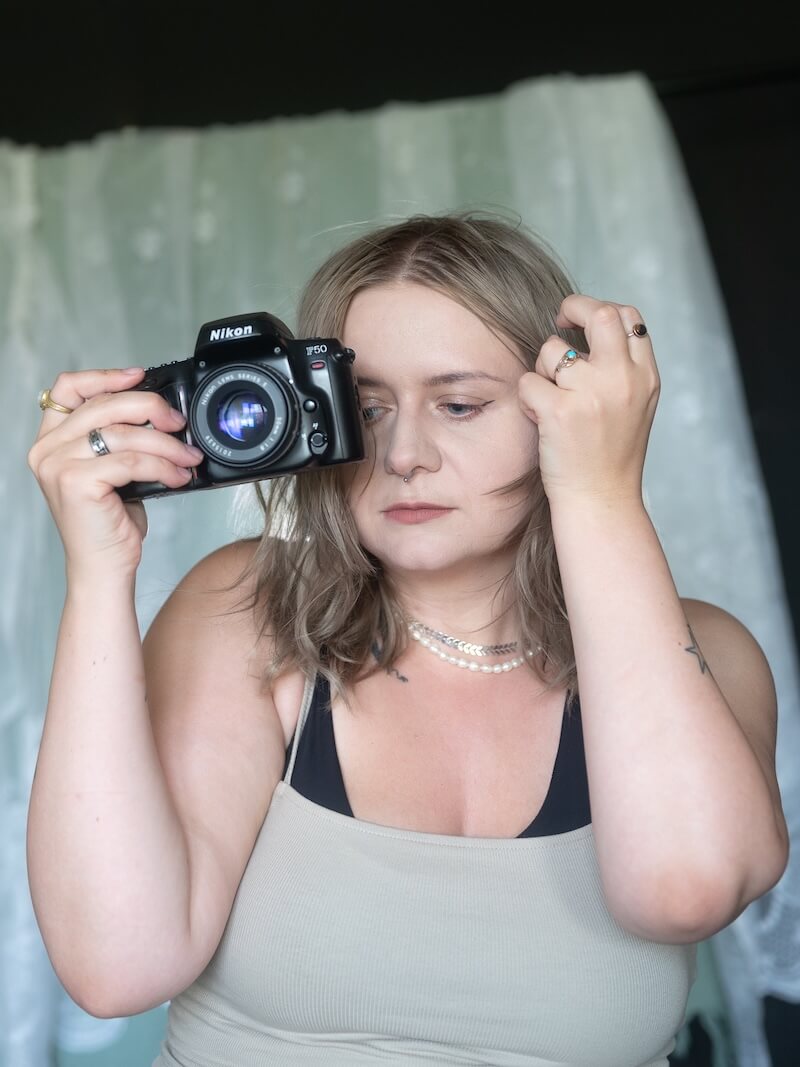
Still, film continues to hold a special place in portrait photography. Its organic grain, color rendering, and unpredictability are difficult to replicate digitally.
In 2026, the usage of film becomes more intentional. Previously the comeback was more about nostalgia. It still is about nostalgia. However, it now also focuses on coming back to the craft of photography. It’s about being mindful and in the moment. Many photographers now combine film and digital, using each medium for what it does best.
Quality over Quantity
As content fatigue grows, both photographers and audiences change their preferences. They value fewer but stronger images over large volumes of mediocre ones.
Instead of delivering hundreds of photos, photographers are curating tighter selections with a clear vision. This also reflects changes in social media consumption. People are more willing to engage with images that feel meaningful or distinctive, rather than endlessly scrolling through similar content.
2026 Portrait Photography Landscape in Numbers
Portrait photography continues to hold a strong and stable position within the global photography industry.
In 2025, the segment was valued at approximately $21.75 billion and is projected to grow at a compound annual growth rate (CAGR) of 7.7% into 2026. Today, portrait work represents roughly 19–20% of professional photographers’ primary specialties worldwide, confirming its relevance despite rapid technological disruption.
Market Size
The broader photography services market is estimated to reach between $39 and $60 billion globally in 2026. Portrait photography consistently contributes around $20 billion.
In Europe alone, photographic activities generate about €11.3 billion, with portraits and headshots forming a significant share of that figure. Looking ahead, portrait photography is expected to expand further, with projections reaching $36.29 billion by 2032.
Growth Rates
Growth in portrait photography remains steady, with forecasts ranging between 4.4% and 7.7% CAGR through 2026–2032. This outpaces several other photography service segments, which are growing at a slower rate of around 2.5–4.52%. The demand is largely driven by personal branding, family photography, and the ongoing influence of social media.



 Behindmud