
I remember it well. It was just before the pandemic broke out in Europe. I was prescribed the wrong pills for depression. I was locked alone in my apartment. And my work was suddenly 100% remote. My life for a few months consisted of ordering pizza and lying on my bed without the will to live. Result? 25 kg more.
It was in 2020, and I’ve never come back to my old, skinny body. I’ve had some attempts, but nothing stuck. In turn, I’ve decided to change my approach towards it. I am Polish, and the Slavic body standards are very rigid. You are basically surrounded by women looking like models. And you’re expected to be one of them, no matter the costs.
To better understand this environment, let’s take a quick look at statistics surrounding body image among Poles:
- Poland has the highest rate in Europe of 15-years-olds perceiving themselves as too fat (45,9%!).
- Not a surprise that Polish girls are “leading” in those statistics. 57,5% Polish girls with a normal BMI consider themselves too fat. Even though Polish boys are more likely to be overweight.
In comparison, only 14% of 15-year-olds in France consider themselves too fat. It’s way below the European average.
Body image statistics
Given this context, what does body acceptance look like in numbers? And how can it be improved on a global and individual scale? Let’s look at some statistics.
- In a 2024 survey, 68% of men felt they had a good body. Meanwhile, 45% of women felt the same. Additionally, 53% of men and 35% of women were happy with their current weight. Additionally, 59% of men and 31% of women liked their appearance.
- 40-60% of elementary school girls are concerned about their weight or fear becoming “too fat”.
- 59% of girls reported dissatisfaction with their body shape. 66% of them expressed a need to lose weight.
- 91% of women are unhappy with their bodies. Many resort to dieting. However, only 5% of women naturally have the body shape portrayed in the media.
- 69-84% of women experience body dissatisfaction and desire to be a lower weight than their current weight. For men, 10-30% experience dissatisfaction.
These numbers differ among locations and age groups, but still paint a scary picture. Poor body image influences a lot of areas, like mental and physical health, our relationships, and even impacts life opportunities.
How to improve your body image?
We’ve covered the current state of body perceptions in society. It doesn’t look good. But what are the remedies?
Photography
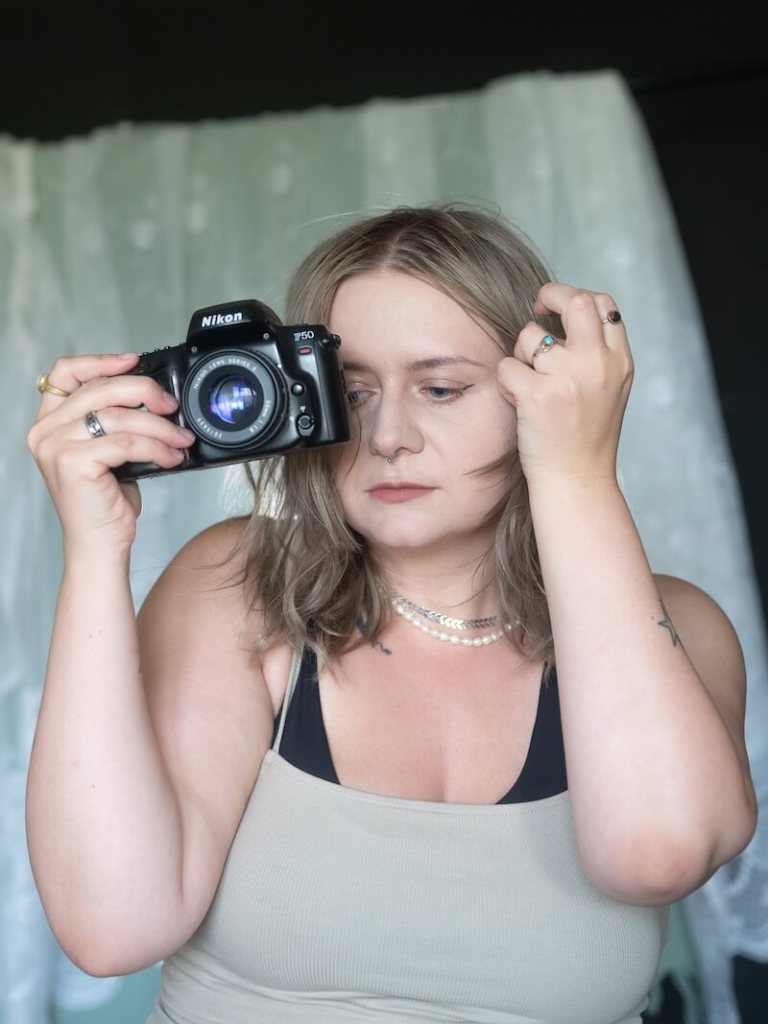
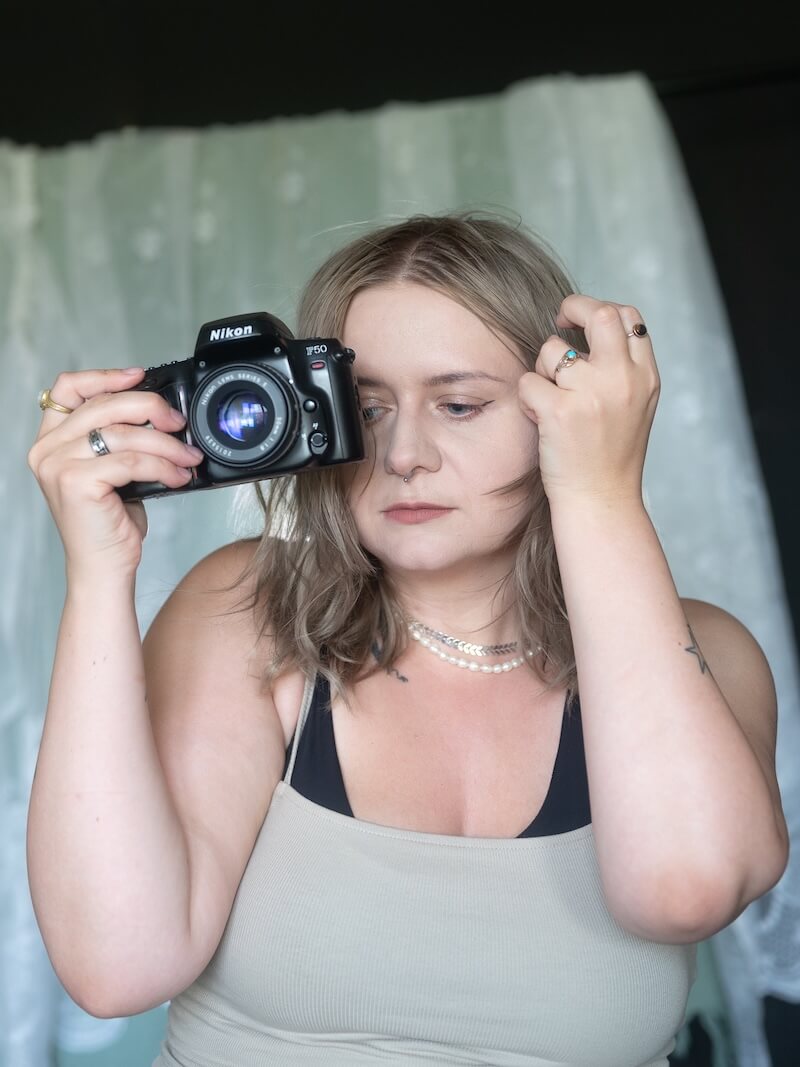
Self-portraits help me with acceptance. Capturing myself helps to gain a new perspective on my body and accept it. I am a portrait and boudoir photographer. I notice beauty in others for living. Why not also me?
You can also try to capture your body in appealing ways, or hire a professional to do it for you.
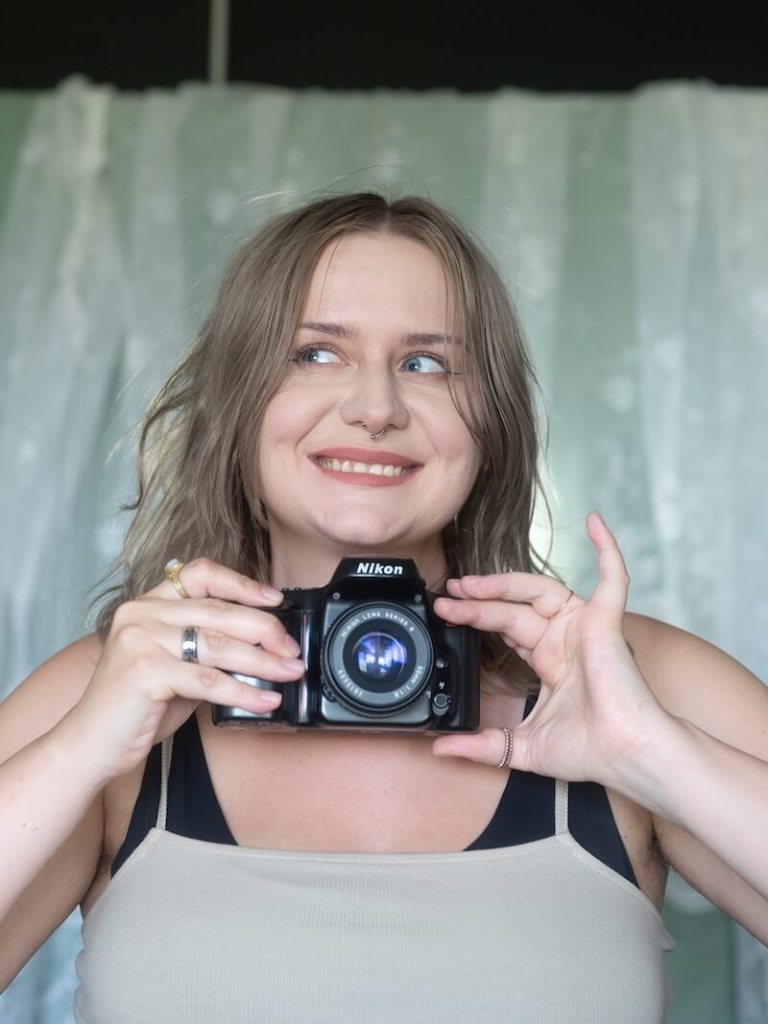
My body tells a story. It’s a story of survival. I survived one of the worst depressive episodes in my life, and I am still here. I am proud of it. Maybe I am not totally in love with it at the moment. However, this fact doesn’t stop me from putting myself out there. It doesn’t occupy a lot of space in my head. The fact that my romantic preferences towards women lean more into bodies like mine is also helpful, I must admit.
Moreover, as photographers, we have a responsibility to consider our influence on visual culture. Ask ourselves if our art is inclusive and diverse. If we show more than conventionally attractive cis women and challenge the visual status quo.
Body positivity books
If I were to recommend one book to read to fix your body image, it would be “Beauty Sick” by Renee Engeln. Renee has been a researcher handling body image issues among women for decades. And she shares her findings, along with very personal stories, in this book.
It helped me to reframe how I see my body in its environment. And what focusing on it too hard takes from me. For me, the most convincing argument was how focusing on my body takes away my time and resources that I could devote to other areas in my life, like family, friends, or career.
Social media
Unfollow all of these fitness and beauty influencers. Everything that makes you feel bad about yourself. You just don’t need a weird new insecurities and new “remedies” for them being sold all the time. It’s just a time and money-waster. Just trust me, you truly don’t need to surround yourself with that. Remember, to an extent, it’s your choice what content you consume. You have enough issues to be worried about your “weird-looking” knees or whatever the new microtrend is.


 Behindmud